A new video is available to assist prospective students in smoothly navigating the application process. We encourage you to consider including this embedded video on your program webpage, incorporating it in an information session and subscribe to the Graduate Admissions channel on YouTube.
Please, encourage your new incoming students to attend these events promoted by Thomas L. Reynolds Center for Graduate Life and Learning and the Graduate School:
There are adverse effects for students when SEA forms are submitted late. This deadline allows Financial Aid staff sufficient time to process awards to students’ accounts prior to the first cancellation for nonpayment (Aug. 10).
The earlier the SEA forms are processed, the better. Students start worrying about balances owed to the University when the first e-bills are issued (July 12). Additionally, as the first cancellation for nonpayment is Aug. 9, students have to either pay or re-register for classes if their bill is not paid in a timely fashion.
Priority deadline to submit forms is Aug. 1
All SEA forms for Fall 2023 term awards should be submitted by Tuesday, Aug. 1. Please communicate this deadline broadly to all in your departments who are involved with issuing student educational awards, including grant-funded non-qualified scholarships.
Class cancellation for non-payment — If SEA forms are not processed by this date, students will be at risk of class cancellation for non-payment for this term.
Recommended practices
Check the student’s account in Banner (TSICSRV) before completing the SEA form to ensure you submit the correct payment amount for tuition and/or fees.
The SEA report inReport Central is your best friend. This report provides a clear picture of what SEA award(s) your student has or will receive for the semester. The data on the report is from the prior day. Note that to gain access to the SEA report you will need to open a ticket by emailing help@charlotte.edu. Include the following message in your email: “I need to gain access to the Report Central Imaging portal for access to the SEA report.” The ticket will be processed via that email.
After you submit a SEA form, review the SEA report regularly while the current registration period is open to monitor your students for any changes in their registered credit hours. The last day a student can add/drop classes is Aug. 28; however a student’s schedule may continue to change due to late adds/withdrawals through the academic petition process.
On the SEA form, one input field indicates the minimum number of credit hours required for the award to disburse. If the student is registered for fewer credit hours than required, the award will remain as “memoed” on their financial aid record.
We realize this deadline may influence the work priorities in your departments in the upcoming weeks. We appreciate your hard work and cooperation to help ensure that our students are successful!
As you may already know, the University is engaged in creating a Strategic Enrollment Plan, and as part of that effort, we are trying to ascertain the distributed resources (personnel + budget) on campus that support graduate student marketing, recruitment, and admissions efforts.
Please share this Google Sheet throughout your college and/or unit to fully capture the resources on campus that support marketing, recruitment, and/or admissions for graduate students. Estimates on the percentage of effort and budgets are fine.
Also, we understand that Graduate Program Directors support many of these efforts, but this spreadsheet is intended to capture both permanent and temporary staff and students with some or all of these responsibilities.
Feel free to add comments and also indicate if a college does not have any staff resources to support marketing, recruitment, and admissions for graduate programs outside of the work provided by program directors. If you have questions, please ask your Associate Dean for Graduate Programs or Johnna Watson in the Graduate School.
An applicant’s ethnicity and race has now been suppressed in the Slate Reader, dashboard views and reports.
As a reminder, the U.S. Supreme Court recently ruled that race cannot be used as a factor in making any graduate admissions decision. However, an applicant’s statement of purpose, resume, recommendations or other information, if it happens to reveal the applicant’s race/ethnicity, can still be considered in the context of an applicant’s experience. Please communicate this change to all your faculty reviewers. If you have any specific questions, feel free to contact me (JohnnaWatson@charlotte.edu) or Sarah Edwards in Legal Affairs (Sarah.Edwards@charlotte.edu).
August 1, 2023 is the last day a prospective student can submit an application for admission to a certificate or degree program.
August 19, 2023 is the last day a post-baccalaureate application can be submitted including the Pre-Teacher Licensure Pathway post-baccalaureate application.
As anticipated, the U.S. Supreme Court has just issued its decision related to the use of race in admissions decisions. Our Office of Legal Affairs is currently reviewing the decision and hopes to provide more detailed guidance in the coming days. Additionally, a training session is scheduled for Thursday, July 6th, from 2:15 to 3:15 pm via Zoom to review the ruling and address any additional information you may need regarding the change.
The takeaway for you all is that, as of today, an applicant’s race cannot be used as a factor in making any graduate admissions decision. However, an applicant’s statement of purpose, resume, recommendations or other information, if it happens to reveal the applicant’s race/ethnicity, can still be considered.
Please communicate this change to all your faculty reviewers. If you have any specific questions, feel free to contact me (JohnnaWatson@charlotte.edu) or Sarah Edwards in Legal Affairs (Sarah.Edwards@charlotte.edu).
July 19, July 20, July 21 | 9:00 AM – 5:00 PM | Atkins 115
Are you working on a writing project? Are you focusing on the formulation of your thesis or dissertation? We know how difficult it can be to work alone during writing projects: distractions, lack of support, and inadequate space often slow down our progress. Enjoy flexible seating, natural lighting, and ample outlets. Breakfast is served in the morning, as well as coffee and snacks will be provided throughout the day. Lunch is on your own, feel free to bring it, we have a microwave you can use. Register here!The retreat requires a $5 nonrefundable participation fee. Please make your payment through our handy payment portal.
The Post-Master’s Certificate in Qualitative Research prepares graduate students, postdoctoral scholars, current faculty, and others with the skills needed for the full range of qualitative inquiry methods used in social research.
This 12-credit-hour certificate is an interdisciplinary program that includes qualitative method-intensive courses in multiple departments. It allows doctoral and other post-master students and professionals to expand their methodological training and pursue a research-intensive career. The program consists of two required courses covering the foundational knowledge of qualitative research and essential textual data collection and analysis methods.
Based on their research interests and academic goals, students select two elective courses from the wide range of qualitative methods courses provided by the ERME program and other departments, such as interview research, qualitative case study, and narrative inquiry.
Contact Information:
Program Director: Dr. Jae Hoon Lim, Dept. of Educational Leadership, Educational Research, Measurement, & Evaluation (ERME) Program
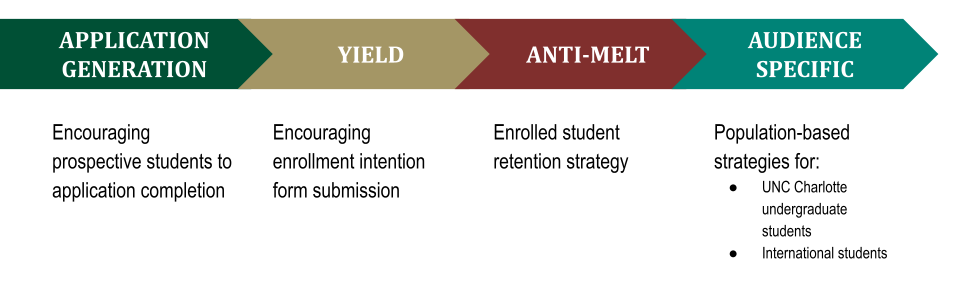
The following communication campaigns to support enrollment are live in Slate:
Application Generation (All Terms)
The target audience is prospects and inquiries. The communications encourage prospective students to start and complete their application.
Yield (Fall 2023)
The target audience is admitted graduate students that have yet to accept their admissions offer. The communications encourage them to submit their enrollment intention form.
Anti-Melt Campaign (Fall 2023)
The target audience is graduate students who have accepted their offer of admission/enrollment intention form. The communications encourage student retention and engagement before they begin their program.
The Graduate School and its partners, like you, continue to manage and support enrollment management efforts to recruit, enroll and retain students in more than 150 graduate programs of study. We recognize the need to place emphasis on improving awareness of UNC Charlotte’s graduate offerings, which includes increasing lead generation and cultivating applicant connection throughout the admissions process to grow enrollment.
The Graduate School will be partnering with a trusted vendor, Carnegie, to implement a website lead generation strategy and we need your help.
Key Terms
Lead Generation
Nurturing
Lead generation is the process of attracting future students to our portfolio of programs and increasing their interest through nurturing − with the end goal of converting them into a student. Generating leads is a fundamental point in an individual’s journey to becoming a satisfied student. Website lead generation and reporting are critical components of an effective graduate student funnel. The website lead generation forms will collect key information like first and last name, email and cell phone number and automatically associate the contact record with the program they are searching for.
Lead nurturing is the process of building relationships with prospective students by building trust, educating, anticipating needs, establishing awareness, and building brand recognition. Nurturing is important because it’s our opportunity to provide value to future students and help them learn more about UNC Charlotte. Website leads are approximately seven times more likely to convert compared to other sources. All leads/contacts will feed into the current Slate communication campaigns and begin nurturing.
Current State
Over 80% of UNC Charlotte graduate program web pages do nothave a lead generation form on their website.
Future State
The ‘Request for Information’ form will be embedded on each graduate program webpage by OneIT before the fall 2023 semester (Phase 1). If you prefer to opt out of this lead generation form, please email grad-comm@uncc.edu with the programs that will be opting out by May 5, 2023.
Phase 2 will include embedding each form on the college-level program webpage during the fall semester.
If you have a graduate program that would not like to embed a lead generation form on your program website, please let us know by sending an email to grad-comm@uncc.edu with the programs that will be opting out by May 5, 2023.
Thank you for your partnership,
Pinku Mukherjee, Ph.D. Irwin Belk Distinguished Professor of Cancer Research Interim Associate Provost and Dean of the Graduate School
Sam Finley Director of Marketing and Communications UNC Charlotte | The Graduate School
Sources: HubSpot Academy, Understanding Lead Generation Ruffalo Noel Levitz (RNL) Graduate and Online Enrollment Workshop
Your college communicator (see list) is your resource for college-level website updates, etiquette and branding. Reach out to them for guidance! If you have difficulty finding your current web contact, you can reference this website or submit a OneIT Help Ticket.
Faculty Judges Needed: The 23rd Annual Graduate Research Symposium, a student-run, interdisciplinary research conference sponsored by the Graduate & Professional Student Government is on Friday, March 24 from 9:00 AM to 12:00 PM, concluding with an awards reception at 12:30 PM. Faculty judges are critical to the symposium’s success.
“I highly encourage graduate faculty to consider serving as a judge during the Graduate Research Symposium. This event is critical to our mission as a top-tier research university and is an important opportunity for our graduate students to gain valuable feedback specific to their research.”
Pinku Mukherjee, Interim Associate Provost and Dean of the Graduate School
The following communication campaigns to support enrollment are live in Slate:
Application Generation (All Terms)
The target audience is prospects and inquiries. The communications encourage prospective students to start and complete their application.
Yield (Summer 2023)
The target audience is admitted graduate students that have yet to accept their admissions offer. The communications encourage them to submit their enrollment intention form.
Anti-Melt Campaign (Summer 2023)
The target audience is graduate students who have accepted their offer of admission/enrollment intention form. The communications encourage student retention and engagement before they begin their program.
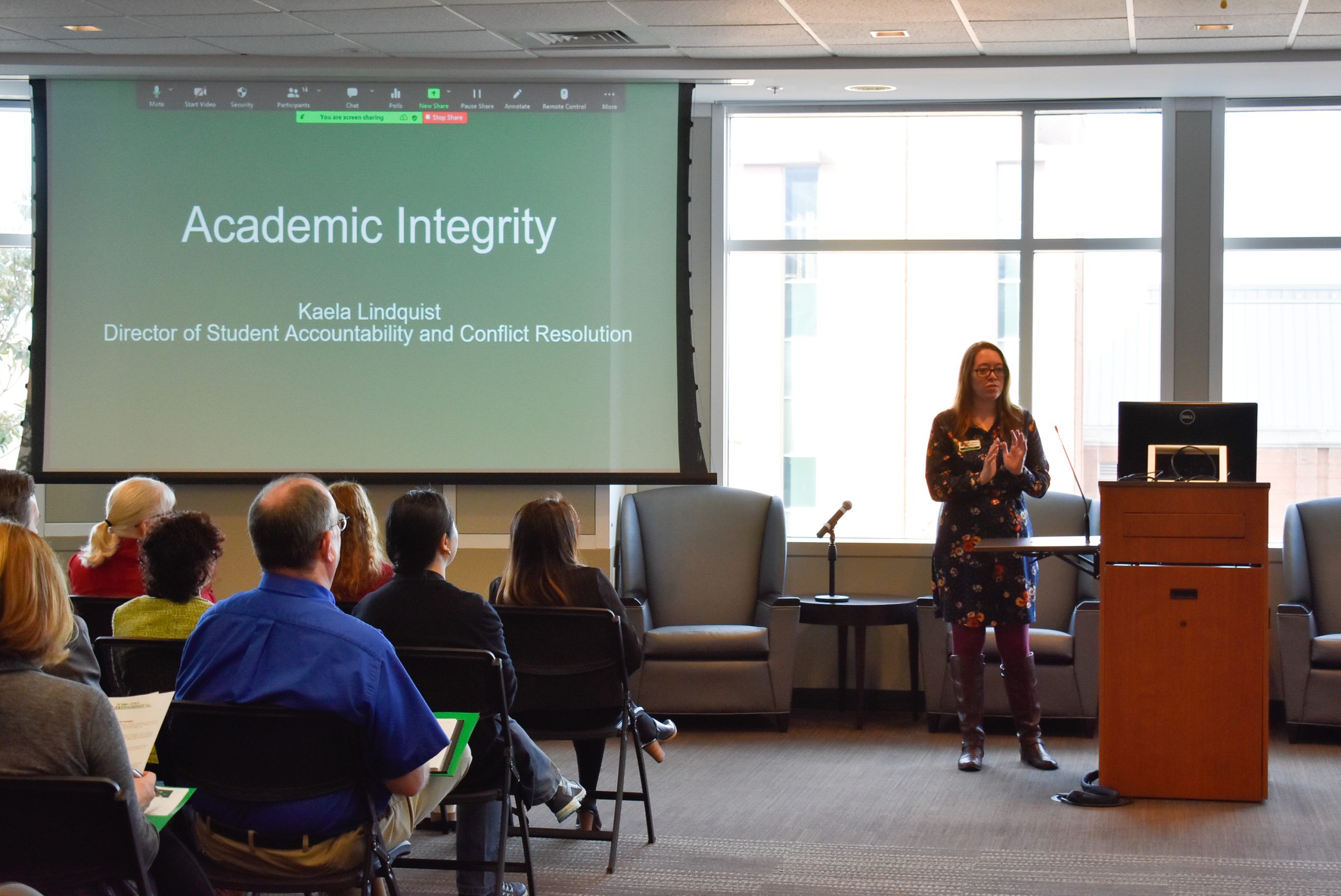
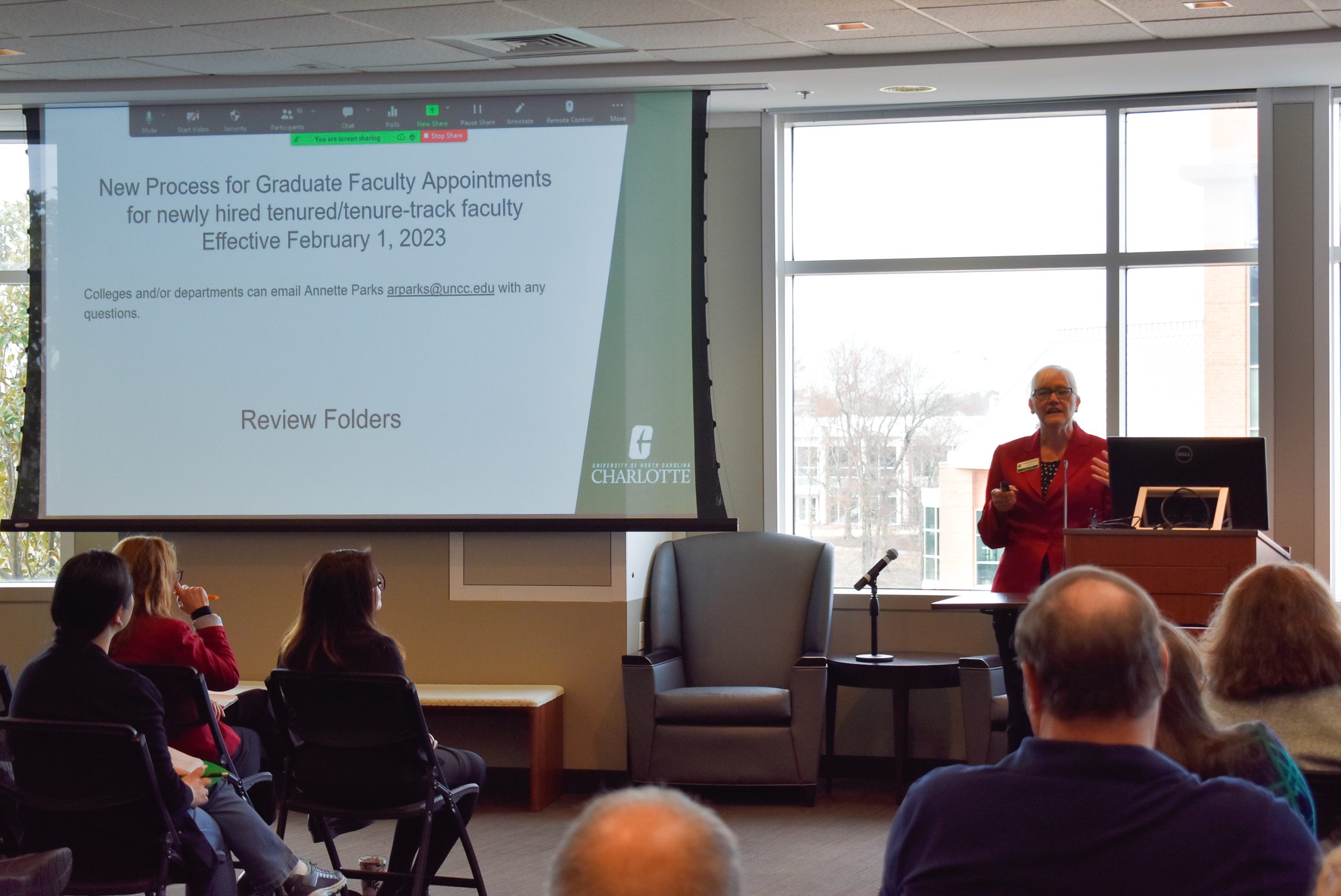
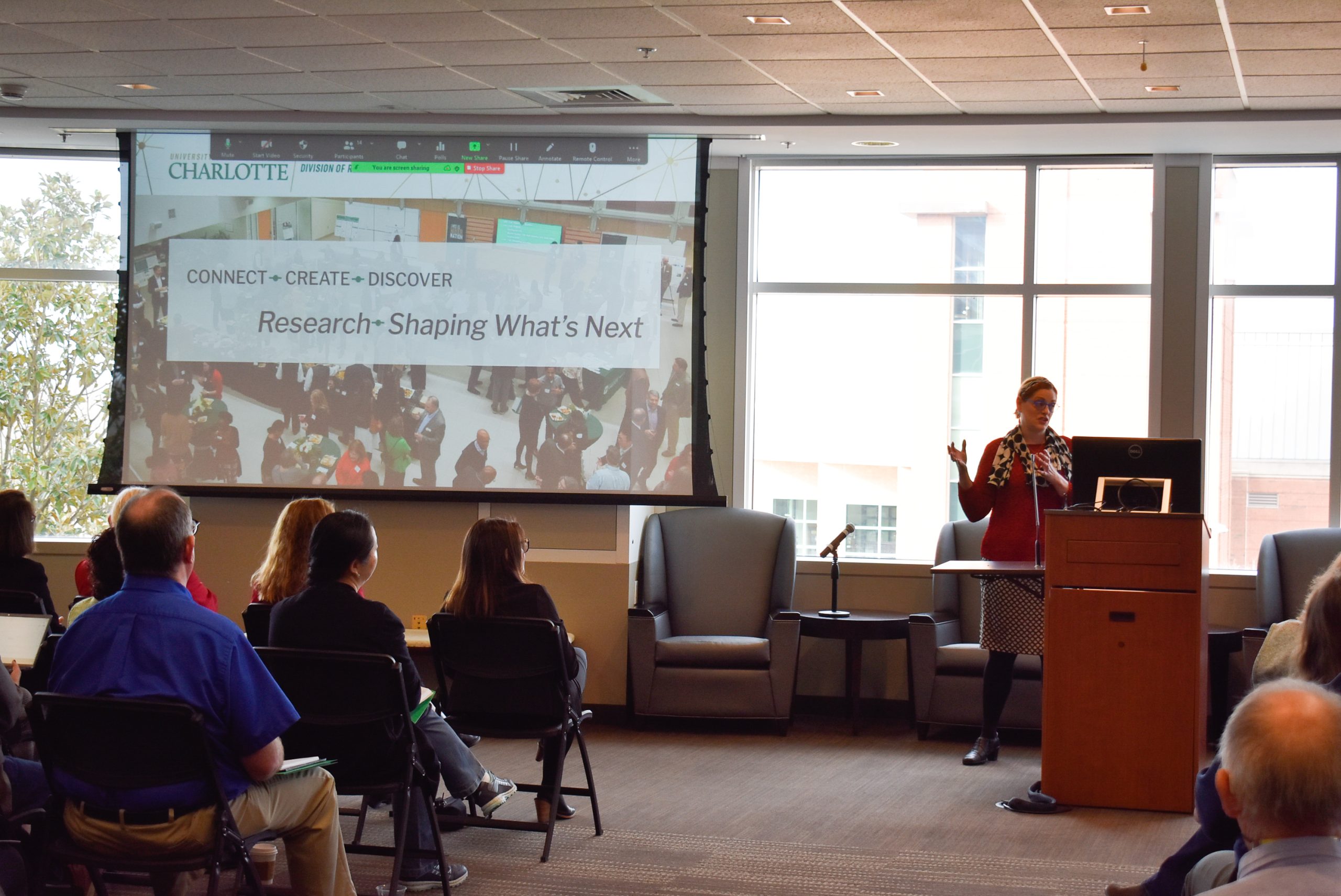
Thank you to all who attended the Graduate Education Summit. We encourage you to review the resources from today’s session by viewing the slide deck and reading the additional resources discussed. A special thank you to our guest presenters: Sarah Edwards, Kaela Lindquist and Deb Thomas.
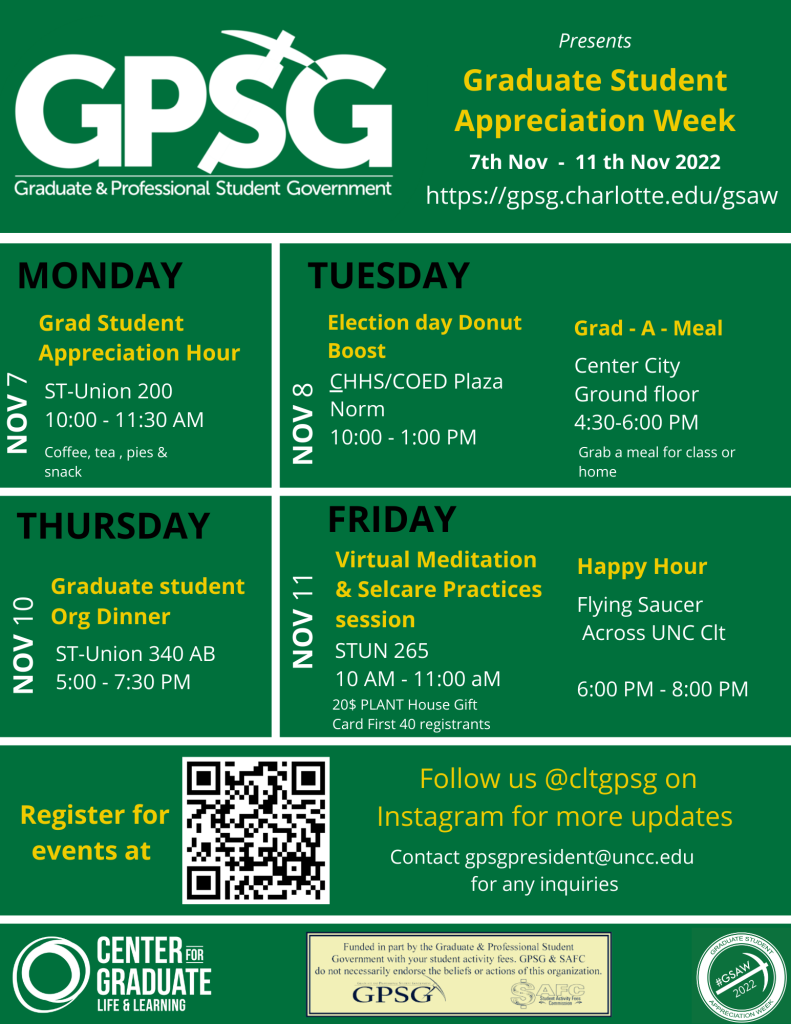
As a stakeholder in graduate education, we invite you to acknowledge the hard work of graduate students during the Graduate and Professional Student Appreciation Week (Nov. 7-11). Please encourage your students to attend these events. Feel free to stop into an event or two to have coffee or catch up with these students to show your appreciation.
Several communication campaigns to support the student lifecycle are in development in Slate for the following areas:
The anti-melt campaign for Spring 2023 launches on Wednesday, October 26 and will conclude on Tuesday, December 13. The target audience is graduate students who have accepted their offer of admission/intend to enroll. The communications encourage student retention and engagement before they begin their program.